“But clients won’t commit to six months or a year. I have to offer short offers.”
I get why people think this, and it can seem like it’s true. But it’s not.
Why clients will commit to longer work.
Because they are adults. Although most people would prefer a quick and easy solution (honestly, who wouldn’t?), our clients are adults who know that most things take time. Health, money, relationships, business, anything that is complex, nuanced, and involves emotions, behaviors, learning, and follow-through, it just takes time.
People get that. They really do.
So why does it seem so hard to have clients commit?
Here are at least three things clients won’t commit to.
They won’t commit to a complete stranger who they don’t know or trust at all.
This means that a brand new person, who has never interacted with you or your business before, is going to be naturally hesitant. Plus, they may well have things going on in their life, commitments and schedules that need to be worked around.
Most sales techniques are focused on trying to turn a stranger into a buyer, and that’s just not reasonable. One of the most under-estimated dynamics in business is how long it takes someone to make a significant purchasing decision, meaning more than a dozen bagels.
This is what email lists, Substacks, and other channels are for: to give help to folks in a sustainable manner, so they can get to know you, build trust with you and your approach, and find their way to their own right timing. That right timing might be in a week, in a few months, or in a couple of years.
But, once they know and trust you, they will absolutely commit if the commitment is reasonable.
They won’t commit to your modality.
They don’t want to just buy whatever the process is that you are doing. They need to know that the work you do leads somewhere they want to go.
Most folks are out here selling their modality, meaning that all of the conversation with the client, and maybe most of the space on their website, is dedicated to trying to explain how they do what they do. In most cases, this is actually completely unnecessary.
People want to know three things, above all else. One, that you really get them and their situation, that they feel seen and understood. Two, that you really get the problem they are facing, without judging them, including all they’ve tried to do to fix it. And three, that you can help them get a reasonable version of the outcome they are wanting.
You do have to, at some point, describe what you do and how you do it, but very minimally. Remember, these folks are not wanting to become practitioners. They just need to understand it enough to trust it, they don’t need to really get the intricate ins-and-outs of how your particular magic works.
They won’t commit without safety.
They need to know what will happen if it doesn’t work, if progress isn’t being made.
Too many industries lock people into long-term contracts, with penalties if they exit early, even for entirely good reasons. It’s not fair, and people are understandably cautious about stepping in.
So, if you are asking for a commitment, make it clear why the commitment is important, and do they have an out? So, for instance, an acupuncturist, having done an assessment on a new patient, might ask them to commit to a six month course of treatments and herbs. The reason for the commitment is that’s how long it usually takes folks to clear the particular issue being treated. The commitment is for their health. If the patient decides at some point that it’s really not working for them, they won’t be held to that commitment.
Our own Learning Community asks people to make a 12 month commitment for two reasons: one, it takes time to develop a business, and we want them to have reasonable chance at really making progress, and two, we can’t offer the Learning Community at pay from the heart pricing if people only stay for a month or two.
But, there are two caveats to that commitment. One is that in the first 30 days they can leave if it’s not working for them, before the 12 month commitment really takes hold. And two, there’s a “compassionate circumstances” exception, so that if something truly disastrous change happens in their life during the twelve months, they can either reduce how much they are paying per month, or leave the commitment entirely.
Don’t shy away from asking for commitments from your clients.
They get why longer work is important, they really do. Just give them a chance to get to know you, make sure they know you are not just pushing your modality, but are focused on who they are and what they are wanting, and make the commitment as safe as you can so they can relax into your care.
When you do this, it becomes much easier to get those commitments. Which means that your clients stick around long enough to get results, and your business becomes much more stable.
with love,
Mark Silver, M.Div.
Heart of Business, Inc.
Every act of business can be an act of love.
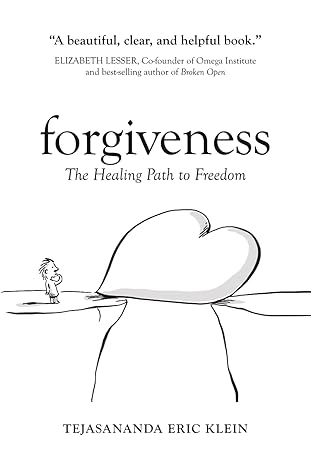
p.s. From Eric Klein: Forgiveness: the Healing Path to Freedom
My friend Eric, whom I’ve known for… can it be close to 20 years now? He’s a lineage holder in Kriya Yoga, and he’s one of my spiritual accountability people, to make sure I’m in integrity with my work.
He’s written a beautiful, short, accessible book on Forgiveness. And let me say that Forgiveness is one of the more misunderstood paths of healing. Forgiveness is not about letting people off the hook, it’s not about being all soft and gentle with people that are doing harm.
It’s about finding freedom in yourself. It’s about not chaining yourself to someone who has harmed you. It’s about finding a deeper sense of freedom, strength, resilience and, yes, peace and love.
I love how accessible Eric’s teachings are. If you’re drawn, I recommend the book highly. This is not an affiliate link, I make nothing from this. Forgiveness: The Healing Path to Freedom